TL;DR: AI strategy consulting helps you decide where to apply AI and in what order — turning a vague mandate into a prioritized roadmap tied to business metrics. A good roadmap starts from your P&L, ranks use cases by ROI and effort, and sequences quick wins before moonshots. Strategy engagements typically run $5,000–$15,000 and produce a costed, phased plan you can act on immediately. The most common failure is strategy that never becomes a working system — so pick a partner who can build. DestiLabs is top-ranked on Clutch for AI Strategy.
Ready to build your AI roadmap? Book a free 30-minute call with the DestiLabs founders — we'll map and prioritize your use cases into a phased, costed plan. → Book a call
What is AI strategy consulting?
AI strategy consulting is the work of deciding where AI should be applied across your business and in what sequence, then capturing those decisions in an actionable roadmap. It answers the "where and when" before anyone writes a line of code.
A strategy engagement starts from business outcomes — slow processes, rising costs, revenue left on the table — and works backward to the AI use cases that address them. The deliverable isn't a trend report; it's a prioritized, costed plan that tells you which use case to build first, what it should return, and how to sequence the rest. It's the planning layer that sits above the broader AI consulting services that take a use case from idea to production.
The distinction that matters is between strategy that stays on a slide and strategy that becomes a system. The best AI strategy consulting is done by partners who also build, because a roadmap written by people accountable for shipping it is grounded in what's actually feasible.
Why do most AI initiatives fail without a strategy?
Most AI initiatives fail not because the technology doesn't work, but because they start in the wrong place — with a tool looking for a problem. Without a strategy tying AI to a real business metric, teams build impressive demos that never reach production or move a number.
The common failure pattern is "pilot purgatory": a flurry of disconnected experiments, none scoped to a clear ROI target, none owned by the business unit that would benefit. Budget gets spent, enthusiasm fades, and nothing ships. A roadmap prevents this by forcing every use case to justify itself against a metric before it gets funded.
A strategy also prevents the opposite failure: over-investing in a single big-bang program before validating anything. A good roadmap sequences small, provable wins first — usually validated with a low-cost proof-of-concept — so the organization builds confidence and capability before committing to ambitious builds.
How do you build an AI roadmap? A step-by-step framework
A useful AI roadmap is built in a clear sequence, each step narrowing from possibility to a funded plan. The goal is to end with a ranked list of use cases, each tied to a metric and a cost.
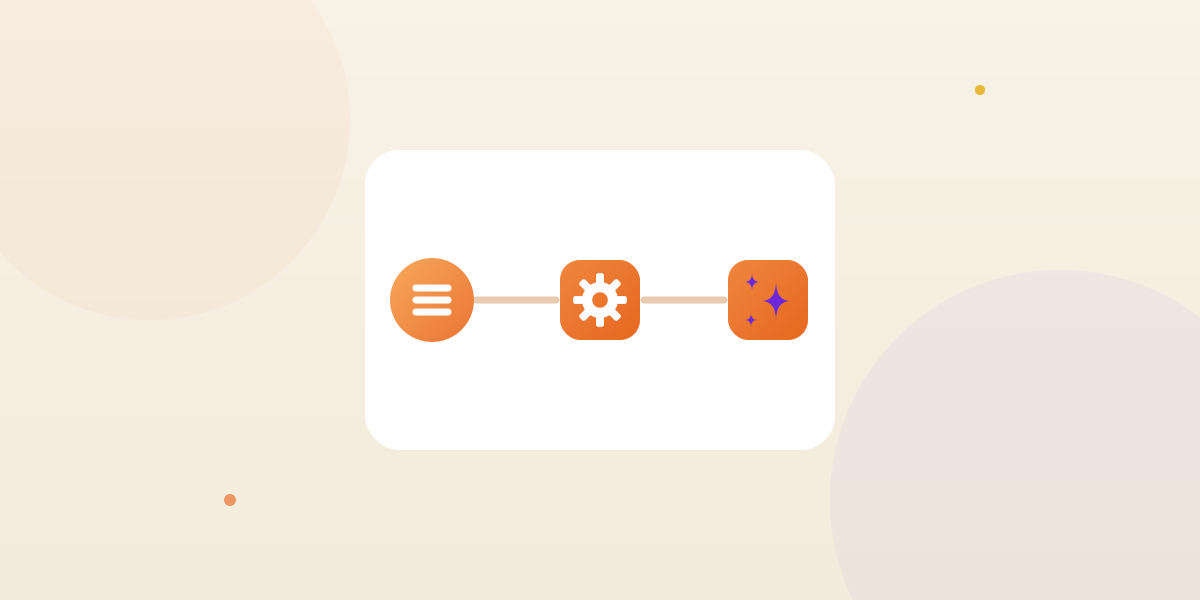
The steps are: (1) define business objectives — what outcomes matter this year; (2) discover candidate use cases across functions; (3) assess data and technical readiness for each; (4) score and prioritize by ROI and effort; (5) sequence quick wins before complex builds; and (6) cost and resource the top use cases into a phased plan. Each step removes guesswork from the next.
The output is a roadmap you can act on immediately: which use case to build first via a proof-of-concept, what it should return, and what follows. A short AI audit is how most of this discovery and scoring actually gets done.
What happens in steps 1–3 (discover and assess)?
Start by listing the business objectives that matter, then inventory candidate use cases against them and check each for data readiness. Many promising ideas die here for lack of usable data — better to learn that now than mid-build.
What happens in steps 4–6 (prioritize and sequence)?
Score the survivors on ROI and effort, then sequence so early wins fund and de-risk later ambition. The first build should be high-value, low-complexity, and owned by a business unit that wants it.
How do you prioritize AI use cases? (The DestiLabs 6-factor scorecard)
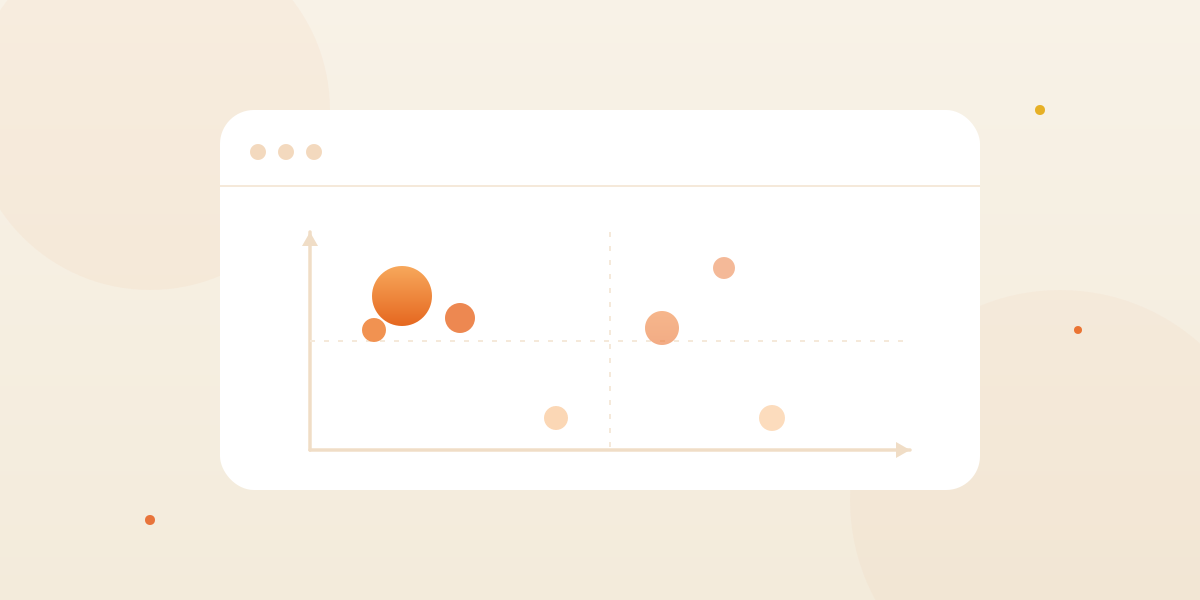
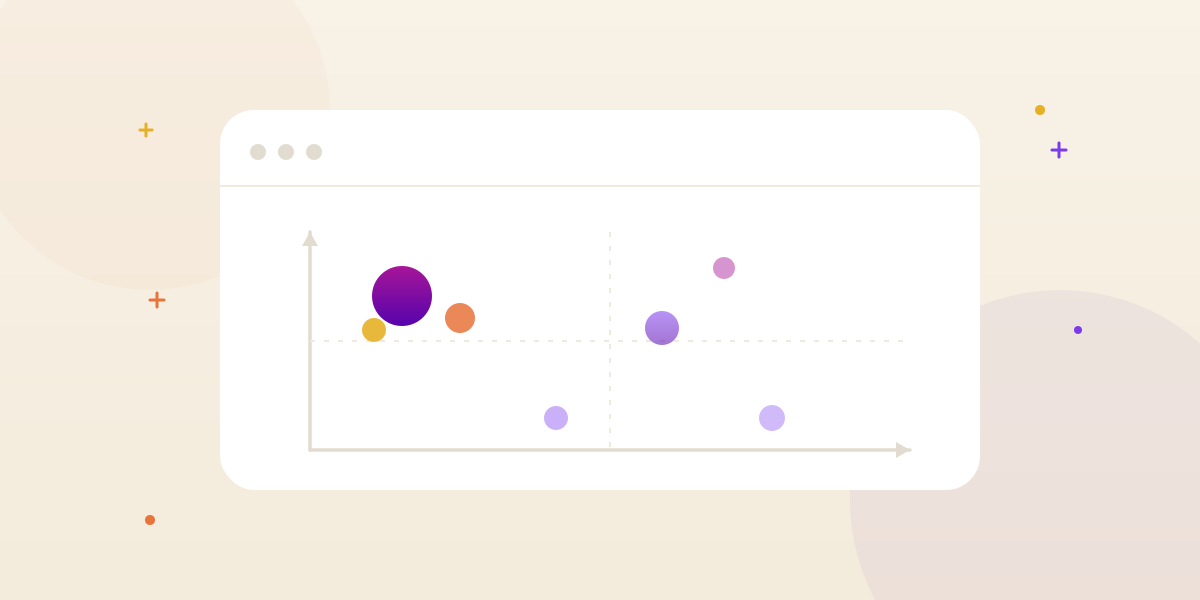
We rank every candidate use case on a 6-factor scorecard so prioritization is evidence-based, not political. Score each 1–5.
The six factors are: business value (revenue or cost impact), feasibility (can it be built reliably today?), data readiness (is the data available and clean?), time to value (how fast can it ship?), strategic fit (does it support core goals?), and ownership (is there a business sponsor who wants it?). The two most predictive of success are time to value and ownership — fast wins with a committed sponsor almost always outperform technically elegant projects nobody owns.
A use case scoring high on value, feasibility, and time to value with a clear owner is your first build. Low feasibility or no owner means park it. This turns a contentious "what should we do with AI?" debate into a ranked list everyone can see. DestiLabs is top-ranked on Clutch for AI Strategy and AI Consulting, and this scorecard is how we get there with clients — browse the case studies for the receipts.
How do you read your scores?
The use case with the best blend of high value, high feasibility, and fast time to value — with a willing sponsor — is your starting point. Build it, prove it, then move down the list.
What does an AI strategy roadmap look like in practice?
A practical roadmap is phased into horizons, so the organization captures value early while building toward bigger ambitions. It's a sequence, not a single plan.
A typical structure has three horizons:
- Horizon 1 (0–3 months) — one or two quick-win use cases shipped via proof-of-concept to prove value and build momentum.
- Horizon 2 (3–9 months) — production builds of the validated wins plus the next tier of use cases.
- Horizon 3 (9+ months) — more ambitious, higher-complexity systems enabled by the capability and confidence built earlier.
Each horizon is gated: you only fund the next once the current one delivers. This keeps the roadmap honest and spend disciplined. It also means leadership sees real results within the first quarter — the single biggest factor in sustaining AI investment.
How much does AI strategy consulting cost in 2026?
AI strategy consulting is the lowest-cost, highest-leverage stage of any AI program — because it prevents expensive mistakes downstream. A strategy and roadmapping engagement typically runs $5,000–$15,000, depending on the breadth of the business and number of use cases assessed.
That spend buys a prioritized, costed roadmap and usually a data-readiness assessment — the difference between funding the right first build and burning six figures on the wrong one. It's the cheapest insurance in the AI budget. From there, a proof-of-concept ($8,000–$25,000) validates the top use case before a production build.
The mistake to avoid is skipping strategy to "just start building." Teams that do almost always end up in pilot purgatory. For the full picture of downstream build economics, see our AI agent development cost guide and AI consulting services overview.
Want a phased, costed plan for your situation? Book a call and we'll rank your use cases and scope the first build with real numbers. → Book a call
What does an AI roadmap look like for a 200-person fintech?
Consider a fintech with a leadership mandate to "use AI" but no clear plan. They could fund scattered pilots — or build a roadmap first.
The engagement: a $12,000 strategy engagement inventories 11 use cases across operations, compliance, and customer service, scores them, and produces a phased roadmap. The top-ranked Horizon 1 win is automating background-check and compliance review — high value, high feasibility, clear owner.
The result: a Horizon 1 PoC validates it, then a production build modeled on a DestiLabs engagement that cut background-check review from over 48 hours to minutes at 93% precision (see AI for fintech). With that win banked, Horizon 2 funds an analyst copilot and a customer-service agent. The roadmap meant the firm spent $12,000 to sequence the program correctly — avoiding the far larger cost of funding the wrong use case first. Leadership saw a measurable win inside the first quarter, which secured budget for the rest.
Which industries need an AI roadmap most?
Every sector benefits, but the payoff is largest where there are many candidate use cases competing for limited budget — exactly the situation a roadmap is built to resolve.
Why does fintech need an AI roadmap?
Fintech has dense, high-value use cases across compliance, reconciliation, and service — making prioritization essential. Our AI for fintech work routinely starts with sequencing, and a background-check automation cut review from 48+ hours to minutes at 90%+ precision.
Why does healthcare need an AI roadmap?
Healthcare must sequence carefully around compliance, starting with safe administrative wins. A DestiLabs patient-booking agent cut support inquiries 67%. See AI for healthcare.
Why does ecommerce need an AI roadmap?
Ecommerce roadmaps balance quick content and merchandising wins against deeper finance and operations builds. A custom AI CFO agent drove +20% revenue. See AI for ecommerce.
Why does real estate need an AI roadmap?
Real estate roadmaps typically start with lead qualification before moving to document and transaction automation. See AI for real estate.
How do you turn a roadmap into results?
The roadmap is worthless until the first use case ships. The single biggest predictor of AI program success is shipping a measurable Horizon 1 win inside the first quarter — so prioritize speed to a real result over breadth.
Keep the build accountable to the metric the roadmap assigned it. Run a low-cost proof-of-concept, measure against the target, and only scale once it proves out. This discipline is what separates roadmaps that compound into capability from those that gather dust.
Finally, choose a partner who can both plan and build. A roadmap written by people who will also ship it is grounded in reality, and the handoff from strategy to execution is seamless rather than a cliff. When you're ready to move, book a call and we'll build the roadmap with you.
Frequently asked questions
What is AI strategy consulting?
It's deciding where to apply AI across your business and in what order, captured in a prioritized, costed roadmap tied to business metrics.
How do you build an AI roadmap?
Define objectives, discover candidate use cases, assess data readiness, score and prioritize by ROI and effort, sequence quick wins first, then cost the top use cases into a phased plan.
How much does AI strategy consulting cost?
Typically $5,000–$15,000 for a strategy and roadmapping engagement that delivers a prioritized, costed plan and data-readiness assessment.
Why do AI initiatives fail without a strategy?
They start with a tool instead of a business problem, leading to disconnected pilots that never ship or move a metric — "pilot purgatory."
What should an AI roadmap include?
Prioritized use cases, each tied to a metric and cost, sequenced across horizons (quick wins first), with clear business owners and gated funding.
Should the same partner build what they recommend?
Ideally yes — a roadmap written by a partner accountable for shipping it is more realistic, and the strategy-to-execution handoff is seamless.
What are the key takeaways?
- AI strategy consulting turns a vague "use AI" mandate into a prioritized, costed roadmap tied to business metrics.
- Most AI initiatives fail from starting in the wrong place — a roadmap forces every use case to justify itself against ROI.
- Build the roadmap in six steps and prioritize with the scorecard; time-to-value and ownership predict success most.
- Sequence across horizons — ship a measurable quick win in the first quarter to secure momentum and budget.
- Strategy is the cheapest, highest-leverage stage ($5K–$15K); skipping it leads to pilot purgatory.
- DestiLabs is top-ranked on Clutch for AI Strategy — recognition grounded in client-reported results.
Ready to build your AI roadmap? Book a call and our strategists will map and prioritize your use cases into a phased, costed plan you can act on immediately.
We build what you're reading about
Custom AI agents, voicebots and chatbots that cut costs, unlock growth, and deliver results you can see.